Develop wire-forming part removal around machine permission, a stable grip, withdrawal clearance and collection requirements for the next operation.
Key Result 1
Key Result 2
Key Result 3
Springs, bent-wire components and other wire-formed parts can be light without being easy to remove automatically. A component may emerge close to a guide, vary slightly in position or catch on neighboring material. Judgments that an operator makes through sight and touch need to become explicit presentation conditions, tool actions and machine permissions in an automated arrangement.
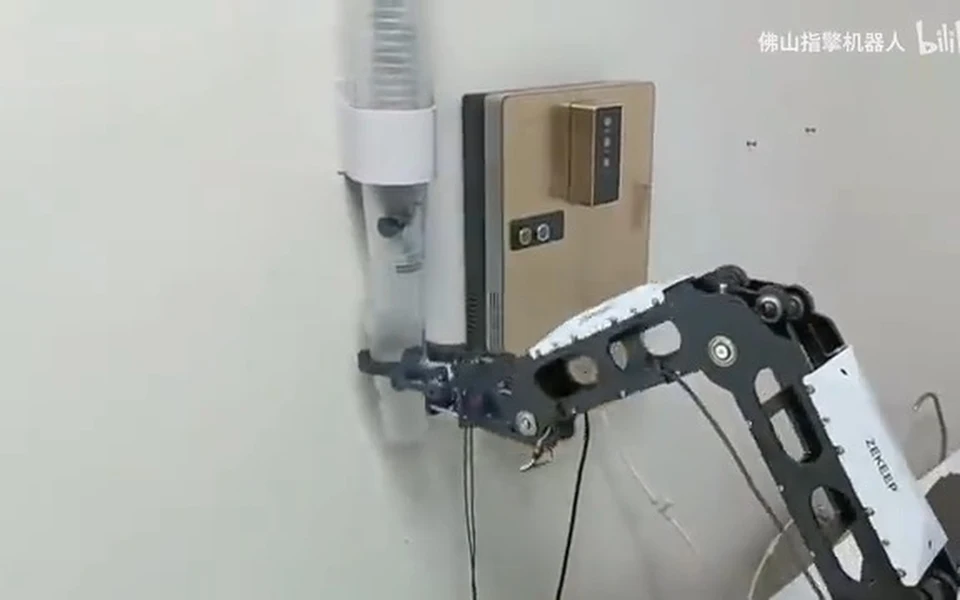
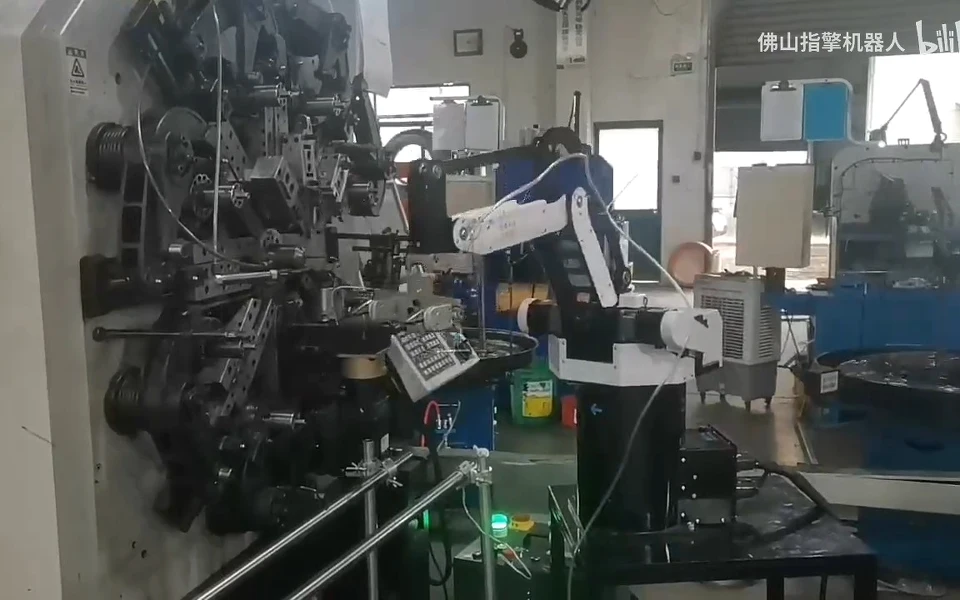
The objective is not to place a robot as close as possible to the processing head. It is to define a workable boundary between processing and removal. ZEKEEP's equipment-side handling demonstration positions a compact robot among wheels, coils and a metal machine structure. For a specific wire part, that application direction can be developed around its outlet, gripping feature and collection method.
Process completion, part separation and permission to enter the pickup area are different conditions. Depending on the machine, tool withdrawal, cutting, reset or presentation may still be required after a completion signal. The actual process must establish which steps apply. Starting the robot on a timer alone can lead to an absent part, retained material or conflicting motion.
Confirm a valid ready-to-remove condition with the machine supplier, together with robot entry and withdrawal constraints. Missing parts, incomplete separation, displaced presentation and machine alarms need defined responses. Ordinary process handshakes coordinate equipment; hazardous motion and personnel protection require an appropriate whole-cell risk assessment and safety design.
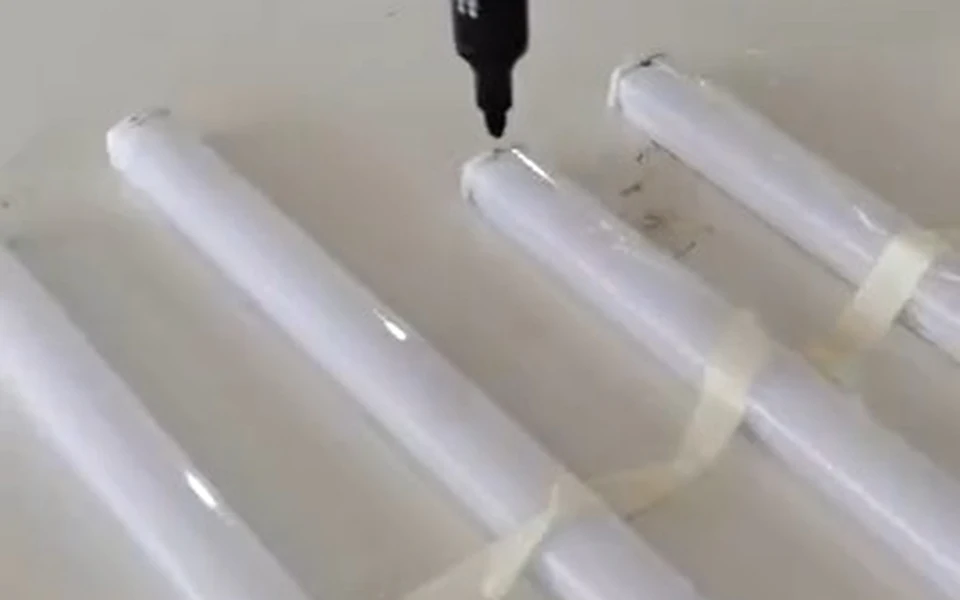
Slender, elastic, open or crossing wire geometry makes the contact location important. It affects deformation, retention and withdrawal. If the component cannot be gripped consistently where it emerges, a dedicated support, locating groove or receiving feature may establish a controlled presentation before the robot takes over.
A single successful grip is not enough. Trials should cover representative dimensional variation, surface conditions and position changes. Check for free movement, dragging and entanglement after pickup. Vacuum suitability depends on a usable sealing area; mechanical gripping depends on contact geometry and permitted force. The fact that a part is metal does not settle the tooling choice.
For replaceable fingers, maintain a clear association between tool identity, component and pickup posture. Any common-tool range should also be sample-validated. Avoid an excessively large opening merely to eliminate changeovers if it makes retention or location less dependable.
Existing wire-processing equipment may already contain hoses, guards, guide wheels and service access. Reaching the outlet does not prove that the complete tool and carried component can leave it. The layout needs the approach, grip, withdrawal and transfer path, including protruding part geometry and moving pneumatic lines.
For components prone to catching, an immediate diagonal pull can bring the part into neighboring mechanisms. A proposed route might withdraw along a controlled direction before turning toward collection. Guides, support or intermittent presentation should be selected from actual samples and available machine space. Access for material changes, adjustment and maintenance must remain usable.
Where a constant tool direction is sufficient, the 3060H three-axis servo robot is a candidate, rated at 2 kg with a 497 mm maximum working radius. For independent in-plane direction adjustment, compare the 4060H four-axis servo robot, rated at 1 kg with a 592 mm maximum working radius. Include the gripper, fittings and adapter, then validate center of gravity, motion conditions and the complete route. Low component mass alone does not establish suitability.
Bulk collection may be suitable where loose parts are acceptable, with attention to container position, accumulation and a full-container response. Inspection, assembly or packaging may instead need maintained direction, separation and easy subsequent pickup. Dropping parts into a deep bin can shorten the immediate move while creating additional sorting work downstream.
Compartment trays, locating carriers or segmented transport can be compared against the part geometry. An unavailable receiver needs a defined wait, buffer or stop condition; the robot should not indefinitely block the machine outlet while holding a component. For continuous production, compare the entire remove-place-return sequence with the available presentation window, not just the robot's unloaded travel speed.
After single-part low-speed trials, introduce continuous presentation, occasional missing parts, position changes, collection pauses and interrupted-cycle recovery. Record missed pickups, multiple parts carried together, deformation, interference and reasons for manual handling. Give each condition an understandable response. Where a component still requires manual separation, a clear operating boundary is more useful than hiding the exception inside a demonstration loop.
To discuss equipment-side part removal with ZEKEEP, prepare samples or drawings, close views of the outlet, the part's pickup posture, available interfaces and permitted mounting space. Contact ZEKEEP to evaluate the machine and handling arrangement together. The related payload, center-of-gravity and working-path guide helps assemble the tool and part information needed for selection.
Add our technical expert on WeChat, or submit your process requirements. We'll provide a free automation feasibility and ROI assessment report.