Once a detection appears on a screen, how does a robot pick the corresponding object? Answering that question connects images, coordinates, tooling and motion. It is also central to practical smart-manufacturing education. ZEKEEP brings vision and robot operation into one workstation so learners can examine how software results become physical actions.
Its vision-sorting demonstration combines a camera, conveyor arrangement, robot and operating interface around coloured training blocks. Differences in colour, position and destination give students readily understood variables. The value is not limited to a completed automatic movement: imaging settings, spatial relationships and execution can be considered together in an environment that supports practical investigation.
Connect different responsibilities on one bench
The vision system establishes where a target is and how it is classified. The robot uses a coordinate relationship and suitable tooling to perform the transfer. Presentation and receiving arrangements bring the object into and out of the task. Successful recognition does not establish a dependable grip, while correct robot movement does not prove that the classification rule is right.
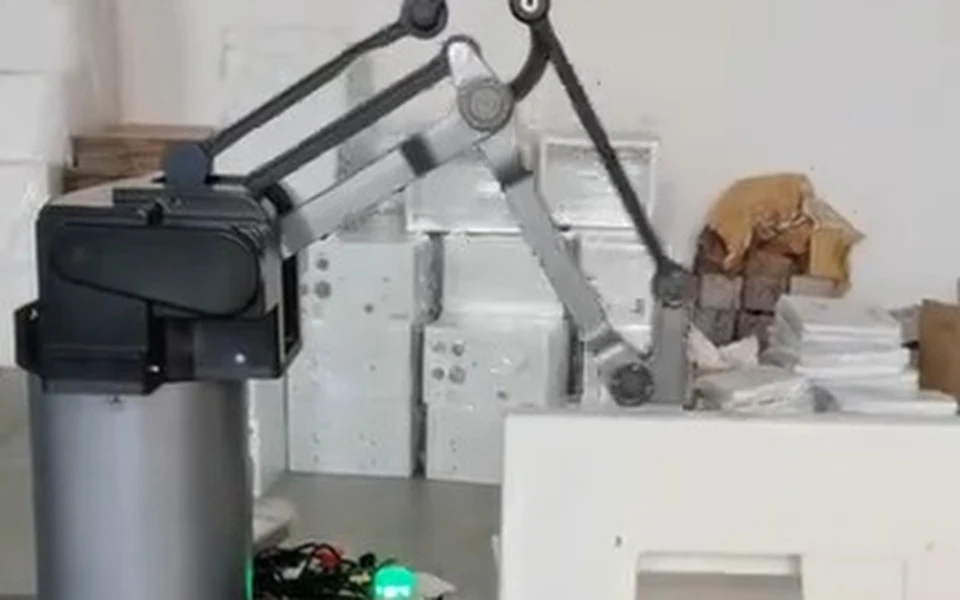
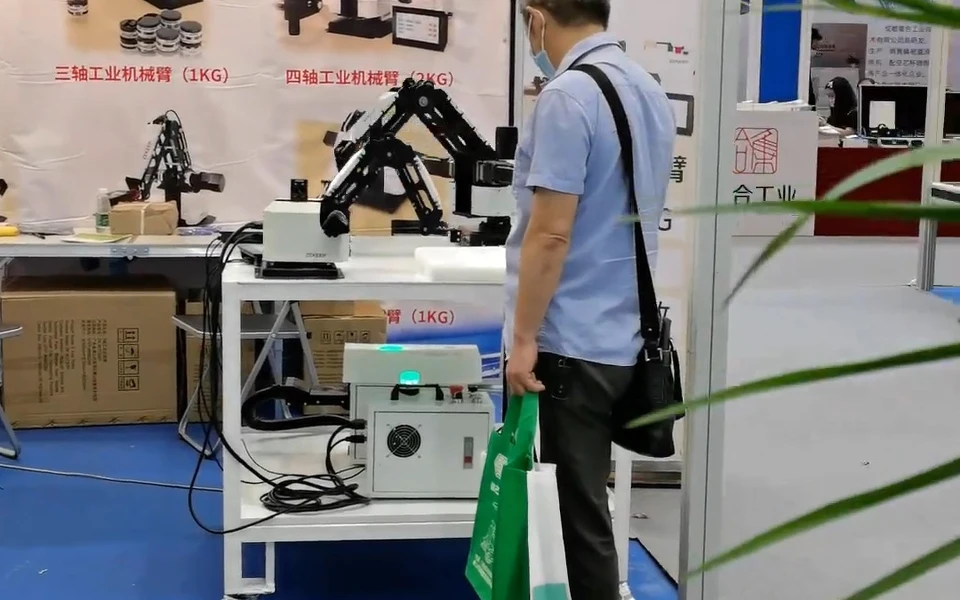
ZEKEEP's current machine-vision sorting training workstation combines a four-axis arm, industrial camera, lighting, an adjustable vision support and related software. It is an educational product. Within the selected configuration, teaching can progress from image acquisition to localization, classification and guided handling without immediately introducing a complicated component that obscures the underlying relationships.
Make an adjustment produce an explainable result
Changing camera height or lighting direction can change the image of the same object. Changing the tool can alter the required pickup relationship. These are useful controlled experiments: retain the initial conditions, record the modification and explain whether an observed offset comes from imaging, coordinates or tooling.
Begin with a single type of training part at a fixed location. Add colour classes, varied positions and conveyor triggering progressively. One major new variable at a time makes a failed pickup easier to analyse. A deliberately incorrect setup can become a diagnosis exercise, helping students learn a method rather than merely retain a parameter set that once worked.
Use a project to connect mechanics, controls and software
A combined task can require recognition, destination selection and physical transfer, including a response when no valid target is found or the receiver is occupied. Students can submit coordinate definitions, classification rules, a motion sequence and test records, explaining what permits each transition.
This approach reflects ZEKEEP's product direction of connecting the arm, perception and peripheral control. A school can emphasize introductory vision experiments, then assess PLC or other teaching-module links within the available hardware interfaces and software access. The scope should follow the teaching objective, not simply the number of modules that fit on the bench.
Define a new problem before moving to industrial parts
Coloured blocks make classification and transfer relationships accessible. Manufactured components introduce different challenges: reflections, variable surfaces, occlusion and restricted gripping areas. A training exercise therefore should not be represented as evidence of performance across industrial inspection applications.
For a manufacturing requirement, first distinguish localization, classification and inspection for a defined defect. Provide representative samples and the decision rules that matter. The reflective-round-part sorting concept shows why image formation, target validity and end tooling require a joint assessment rather than a direct substitution of the demonstration part.
ZEKEEP's vision-and-robotics approach extends product familiarization into practical system work that can be operated, explained and investigated. When planning a teaching facility, share the curriculum, student experience, training objects and desired software access. Discussing the vision, control and learning task with ZEKEEP helps align the equipment with the capabilities students need to develop.