An output is active in a ladder program, but the mechanism has not completed its movement. A position has been reached, yet the next step cannot start. These questions become tangible when PLC learning moves from simulation to physical equipment. ZEKEEP uses a desktop educational robot to connect programming, mechanical transmission and operating conditions within one practical system.
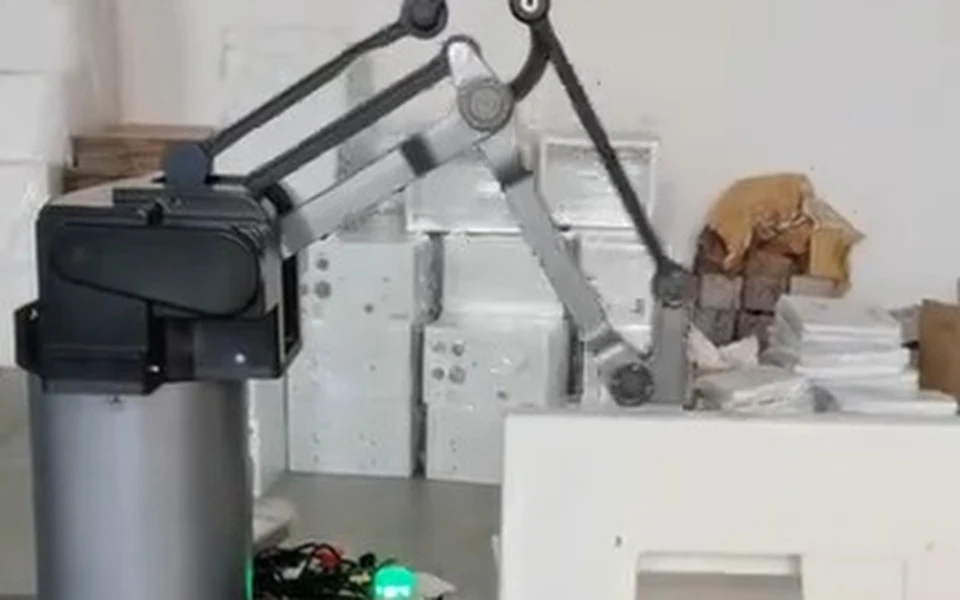
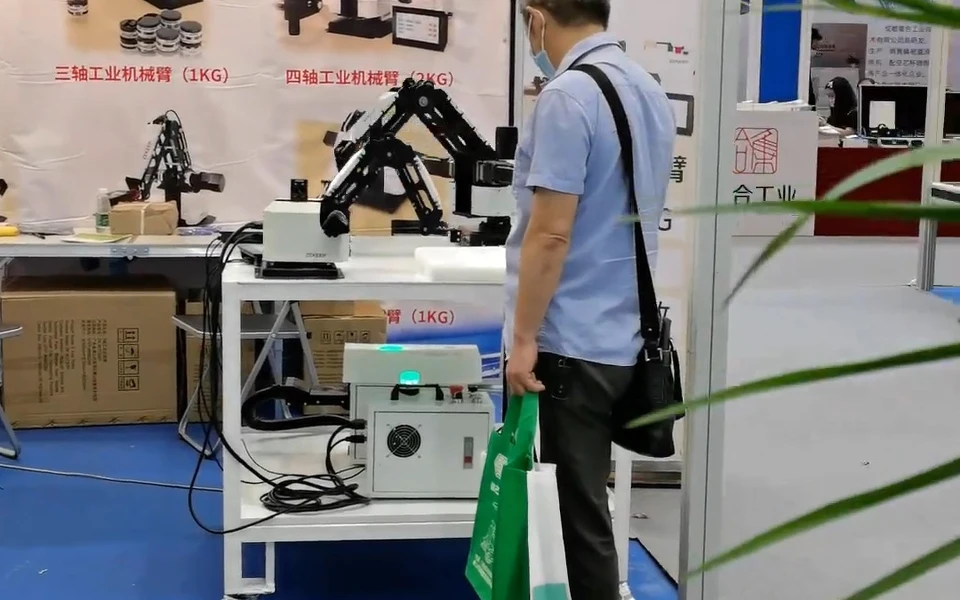
An early PLC-robot demonstration presents the body, end tool, cabling and control equipment while introducing the relationship between mechanics and the controller. The teaching direction starts with understanding the machine, then the conditions for one action, and finally a sequence. Reproducing a program that happens to run is not the only learning objective.
Understand what the program is controlling
For students new to robotics, a visible position change can make an abstract variable easier to understand. Joint movement, end orientation and clearance above a work surface connect commands to physical consequences. A desktop arrangement also allows pendant operation, mechanism behaviour and electrical connections to be discussed together.
Small equipment still requires appropriate operating discipline. Before motion, follow the equipment requirements for fixing the base, checking the movement area, positioning people and establishing a stopping method. Instructor-managed checks make conditional startup part of the course from the beginning rather than an issue added after students can run a sequence.
Give sequential control an observable material condition
A first exercise might transfer a training piece between two positions without immediately attempting continuous automatic operation. Establish approach, pickup, withdrawal, placement and return separately. Explain what permits each step to begin and what establishes its completion. Missing material, an unconfirmed grip or an occupied receiver needs a defined response.
This helps students distinguish a command, an action and a result. An output may indicate only that a request was issued. Whether the actuator completed the action, or whether the tool retains a part, depends on the sensing and tooling provided. Faced with a stalled step, students should inspect conditions and signals before adding an arbitrary delay.
Move from interface awareness to a complete task
ZEKEEP's current three-axis PLC educational desktop robot is intended for automation education and training. Its configuration includes a teach pendant and interfaces such as USB serial and 24 V digital I/O. Confirm connected devices, available signals, wiring and commands against the selected version. Historical demonstration equipment should not be assumed identical to every current product.
Within supported functionality, a teacher can progress from standalone operation to external start requests, feedback and links to another teaching module. Even a simple task benefits from an explanation of who issues the request, who confirms completion and when a new request is allowed. Application sequence and recovery rules are program-design work, not automatically supplied hardware functions.
Assess diagnosis and handover as well as operation
After normal operation is understood, introduce recoverable conditions such as missing feed or an occupied destination. Ask students to identify the condition that prevents progress. Before restarting, establish where the training piece is and whether the task should continue or begin again. This avoids a reset that places another piece into an already completed position.
Learning records can contain signal meanings, an action flow, the program version and exception procedures. Another group should be able to reproduce the exercise under the same conditions. This makes results less dependent on one student's memory and gives the instructor evidence of diagnostic reasoning. The multi-robot manufacturing training concept offers a route towards coordinated station tasks.
ZEKEEP's desktop teaching approach brings robot mechanisms, control interfaces and engineering methods into an accessible physical setting. Share subject areas, students' PLC experience, existing peripherals and laboratory space when discussing an educational configuration with ZEKEEP. A defined practical task provides a stronger foundation for a lasting teaching platform than a list of connectors alone.