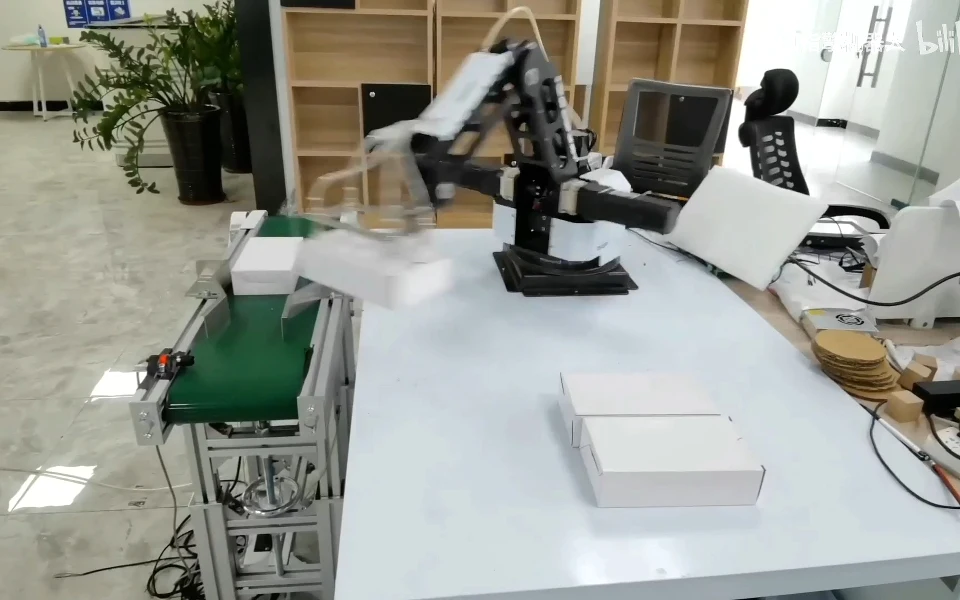
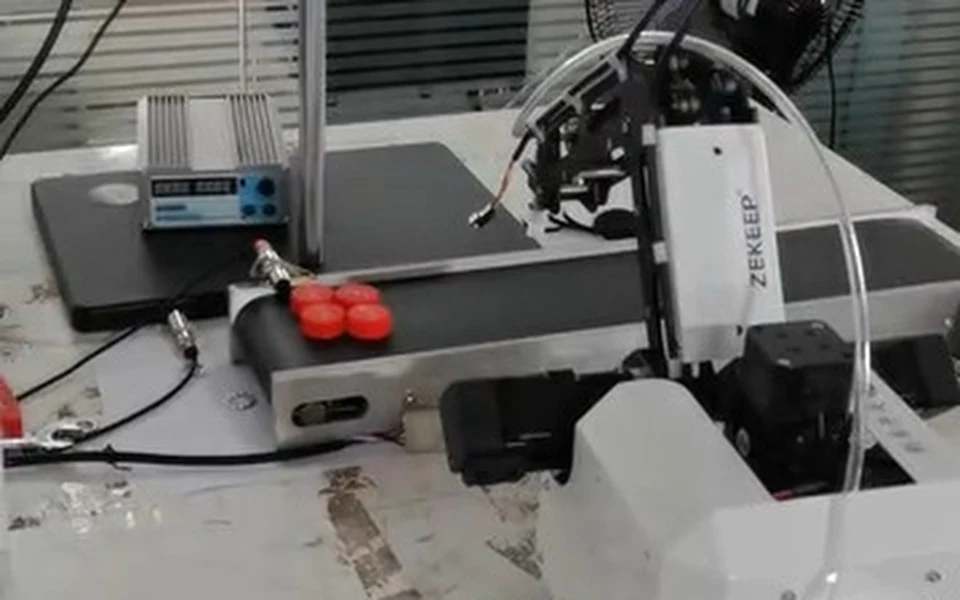
A lightweight part can still slip during a turn. A large cup may fail to retain a particular surface, while a gripper that holds securely may struggle to withdraw after placement. End-tool selection is not a decision based only on mass or outline. Contact, retention, motion and release form one problem, and one successful pickup does not validate the entire cycle.
Begin by defining permitted contact areas, required support and the receiving position. Then compare tool structure and available feedback. The robot provides motion, the end tool establishes contact and retention, and the fixture contributes to location. Clear responsibilities help avoid masking a mechanical problem with more pressure or slower movement.
Vacuum depends on pressure difference and effective contact
A cup needs a suitable surface on which to establish a pressure difference. Holes, roughness, oil, porosity, curvature and lip deformation affect that condition. A tool that holds on one flat area can behave differently near an edge or printed feature. Samples should cover the actual contact locations and representative surface variation.
An idealized calculation illustrates the principle. Assume an effective circular diameter of 20 mm and a pressure difference of 40 kPa. The area is approximately 0.000314 square meters, so ideal normal force F=pressure difference×area is about 12.6 N. This omits leakage, deformation, friction, dynamic loads and safety margins. It is not an allowable handling weight or a project safety threshold.
Normal lifting and loading parallel to the surface are different retention conditions. After tool orientation changes, friction may carry more of the load. An offset center of gravity can also tend to overturn the part. Multiple cups distribute support, but an empty or leaking position can affect a shared circuit; their areas cannot simply be added to establish application capacity.
Check a gripper's access as well as its grip
A pneumatic gripper can retain a component through frictional contact or suitable geometric enclosure. Both approaches need workable entry, contact and release. Finger length, contact position and offset loading affect the actual force arrangement. Manufacturer force figures should be used with their stated conditions and definitions, including whether they refer to one finger, total force or a particular contact location.
On thin-walled or appearance parts, greater force can create distortion, marks or dimensional changes after release. Shaped fingers, suitable contact materials or support features may help, although compliant materials can also change positioning consistency. Where carrier walls or nearby parts restrict entry, reconsider the tool or presentation rather than depending on minimal clearance.
Confirm retention instead of assuming it from a command
A vacuum-on command does not prove that pressure has been established. Completed closing motion does not prove that the component is between the fingers. Suitable vacuum tools may use pressure or flow information, while a gripper may use travel or part detection. Signals, thresholds and response times should follow tool documentation and sample trials, not settings copied from another material.
Distinguish failure to establish retention, abnormal retention during travel and incomplete release. A single check at pickup can miss a later change. The response also depends on current posture, the area below and the available stopping behavior. Ordinary process feedback is not automatically a personnel-safety function.
Loss-of-pressure measures might include suitable non-return devices, circuit zoning, stored-energy arrangements or another tool-specific design. They do not justify an unlimited holding-time promise or a guarantee against dropped material. Validate them with the pneumatic system and whole-machine risk controls. If the contact state cannot be confirmed reliably, define a workable operator response.
Compare the complete tool along the complete path
The moving assembly includes plates, valves, fittings and adapters, not just the cup or gripper body. These components and the part form the robot load. At equal mass, long fingers and wide cup patterns can impose different center-of-gravity, inertia and clearance requirements.
For constant-tool-direction transfer, the 3060H three-axis servo robot is a candidate, rated at 2 kg with a 497 mm maximum working radius. Independent in-plane rotation may direct comparison toward the 4060H four-axis servo robot, rated at 1 kg and 592 mm. Validate the complete load, tool forces and actual motion after selecting the end tool; part mass alone is not an adequate comparison with the robot rating.
Complete the decision at the receiving fixture
Confirm that the receiver supports the part and that the tool can leave after releasing it. Residual vacuum, adhesion, finger contact or surrounding fixture geometry can move the part again during withdrawal. Receiver location and detachment space should develop with the tool design. If both methods work at pickup, release may decide between them.
Record empty and double pickups, slipping, contact damage, retained parts and recovery. Trials should use representative batches, dimensional limits and the intended route, with wear and replacement access included. The transparent-part tray-unloading concept develops the relationship between fingers and carrier space. Share samples, contact restrictions, surface conditions, a tool-mass allowance and receiving-fixture details when comparing tooling and robot configurations with ZEKEEP.