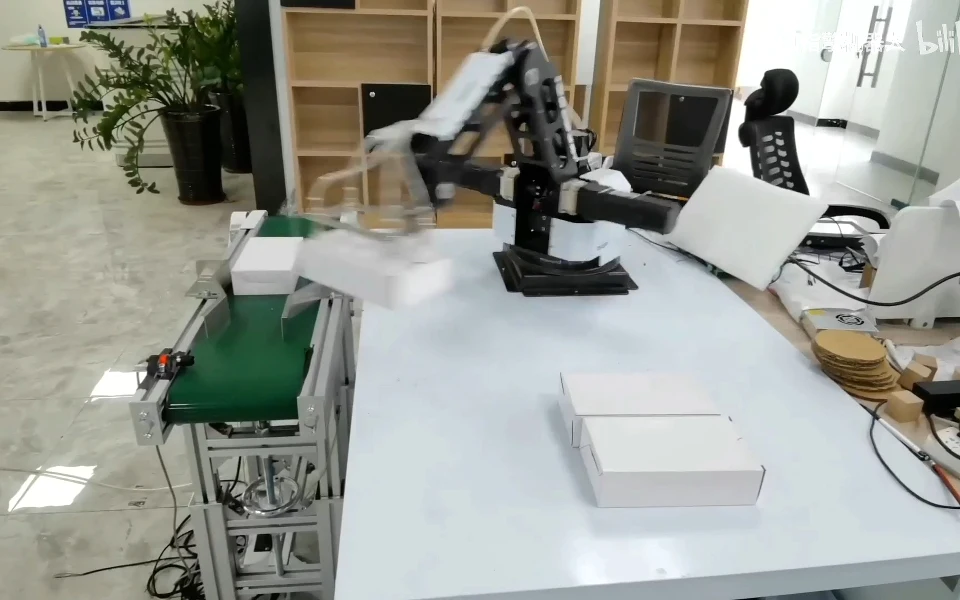
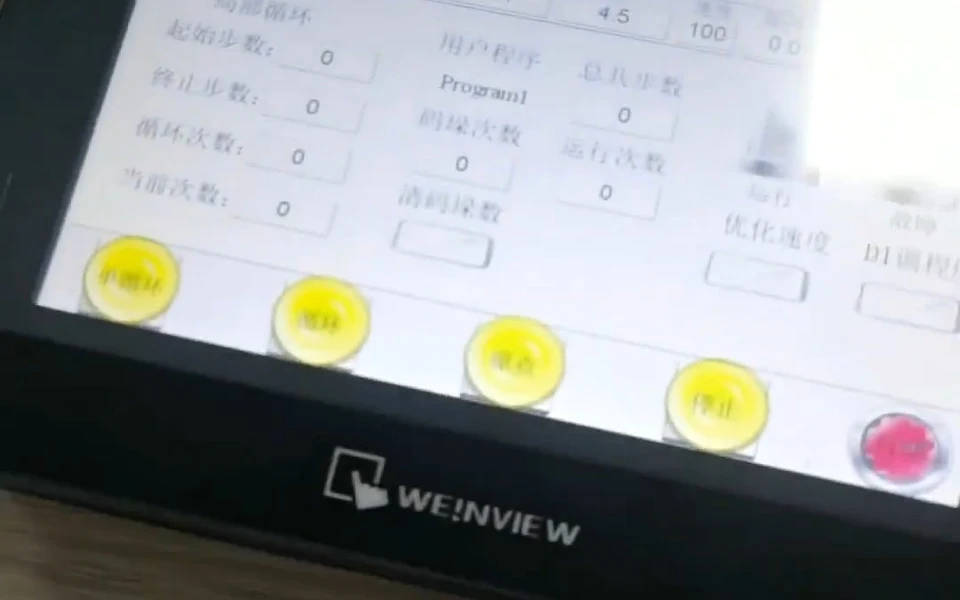
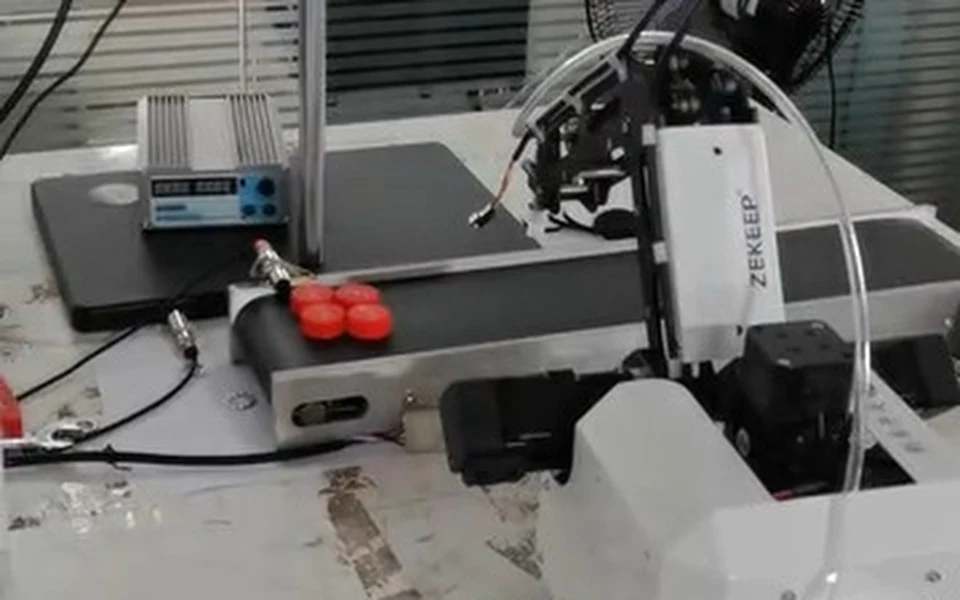
During initial setup, an operator wants to bring the tool to the part efficiently. Pendant jogging can make a controlled adjustment clear, while hand guidance may make a first approach more intuitive. Long-term usability depends on more than moving the arm, however: what is recorded, what changes after tool replacement, and how the program coordinates the fixture and other equipment all matter.
Jog programming and hand-guided teaching serve different needs. For fixed-point transfer, path simulation or frequent product changes, consider rough positioning, fine adjustment, point naming, sequence organization and trial execution separately. This helps turn a successful first setup into a program another shift can maintain.
Use jogging to understand the reference
Jogging moves the robot through the control interface. Joint operation concerns the selected joint; supported coordinate modes require an understanding of the active base, tool or other reference. Check how a direction command affects the real tool in a clear, observable area before working near a restrictive fixture.
Move to an understandable intermediate position, then use the step or speed settings available on the equipment for closer adjustment. Before recording, review the tool definition, motion mode and end direction. Jogging is useful not merely because it moves slowly, but because the operator can explain what the position is relative to and why an approach direction was chosen.
Establish what hand guidance actually records
On supported equipment in the approved mode, manual guidance can help an operator find a position or posture and understand the available space. Confirm whether the selected controller records discrete positions, a particular path representation or another editable object. Every detail of a manually moved arm should not automatically be treated as a repeatable process program.
Check tooling, load settings and permitted travel before use, following the operating documentation. Hand-guidance capability does not mean that touching the robot is appropriate in every state, or that all risk controls for a collaborative application are inherently provided. The relationship between people, tools, fixtures and robot motion still belongs in the system assessment.
Confirm the teaching boundary of the selected series
ZEKEEP's 3042H and 4042H closed-loop stepper models do not support hand-guided teaching. Current documentation for the 60H and 90H servo series lists corresponding hand-guided teaching functionality; confirm the selected model, controller, operating mode and supplied configuration. A demonstration of manual guidance does not extend that capability to every product.
Pendant programming, PLC coordination and secondary development are also different capabilities. A school teaching sequential control and a factory reducing changeover setup time can need different interface access, maintenance arrangements and learning materials. Define the task rather than asking only whether the machine is programmable.
Record more than the final work positions
A transfer can distinguish pickup approach, pickup, withdrawal, placement approach and placement. Check the path between regions as well. Tool commands, material confirmation, station permission and completion states require actual control conditions. A few successful motion points do not resolve shortages, occupied destinations or incomplete release.
Name positions by purpose and fixture, rather than relying indefinitely on unexplained sequential numbers. Associate program, tool and recipe versions. When copying a program for another product, distinguish shared positions from those requiring review. Changing a common point should not unexpectedly alter unrelated moves.
Recheck the right relationship after a change
As an illustrative case, suppose a replacement tool's working point extends 15 mm farther than the previous tool. Repeating the same joint positions does not guarantee that the new working point reaches the old target. Review tool definition and mounting before adding the same adjustment to every part coordinate. If the carrier moved instead, check the fixture reference. Changes to both require separate records and validation.
For a tracing task, correct points must also be connected by an appropriate motion type. Several manually located positions do not automatically form the required straight line or arc. Transitions and process triggers need their own settings. The guide to lines, arcs and process coordinates develops that distinction.
Hand over a validated sequence, not only taught points
Check the station and starting conditions first. Under the equipment's required procedures, examine the unloaded route and stopping method, then introduce tool actions, training parts and peripheral handshakes before the complete cycle. Lower task complexity helps observation; low speed alone does not replace safeguards. Test full carriers, missing material, occupied receivers and recovery separately where permitted.
For constant-tool-direction tasks, compare the 3042H three-axis closed-loop stepper robot and 3060H three-axis servo robot. Both are rated at 2 kg, with maximum working radii of 456 mm and 497 mm respectively. The former has no hand-guidance function; confirm the latter's corresponding configuration and conditions. Tool mass, center of gravity and actual motion still govern suitability alongside teaching convenience.
Share the task, changeover frequency, tooling, operator experience and existing controls when selecting a teaching and programming approach with ZEKEEP. The aim is a configuration that remains understandable during setup, recovery and later maintenance.