“The machine is ready; the robot can enter” may be enough for an experienced operator, but it is ambiguous to software. Ready might mean processing complete, spindle stopped, access open, fixture released or simply no active alarm. Compressing those conditions into one undefined signal makes the next permitted action unclear.
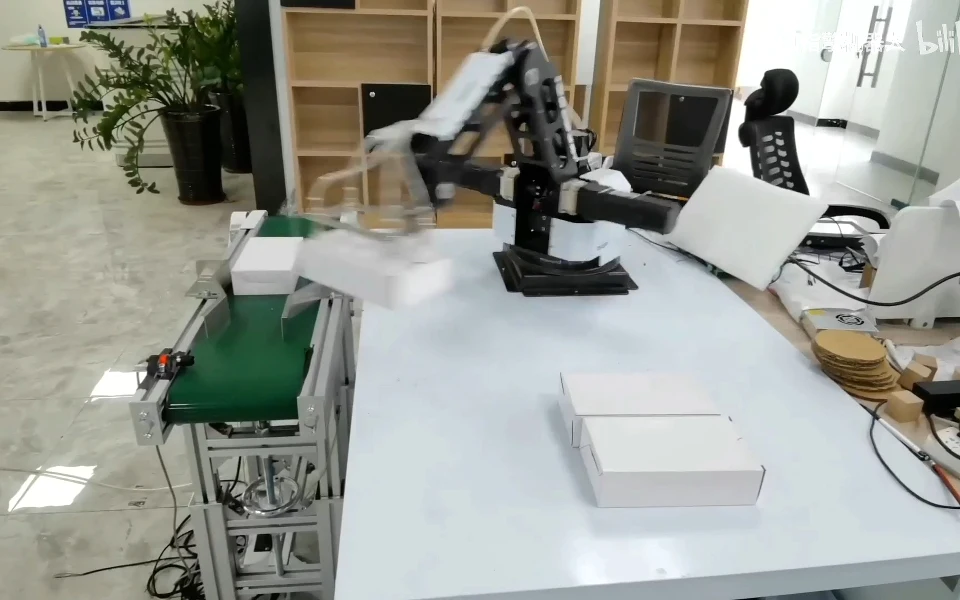
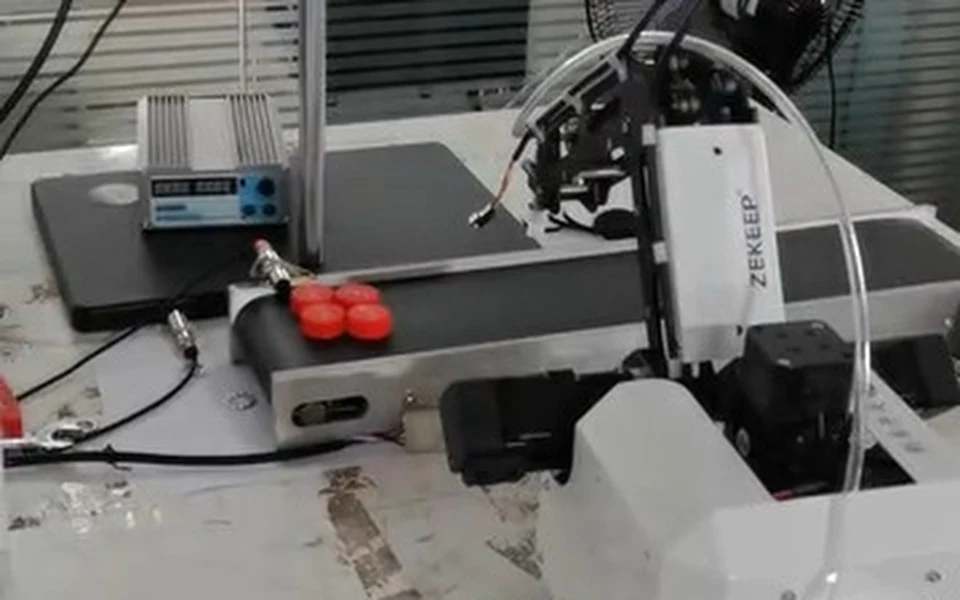
In a small-parts tending retrofit, the feeder, machine and fixture already have their own sequences. Adding a robot requires explicit responsibility and permission for each handoff rather than merely connecting inputs and outputs. ZEKEEP's equipment-side transfer application provides a relevant context, while the actual sequence must follow the machine and complete cell design.
Separate permission to load from permission to unload
Loading needs a destination that can accept a new part. Unloading needs an existing part that can be removed. An open fixture could mean either one, depending on the task. A generic fixture-ready flag without that context is insufficient.
For each process signal, record its owner, meaning, assertion and withdrawal conditions, timeout response and reset conditions. Establish whether it reflects a physical confirmation or only a command. A release command is not proof that the fixture is open, just as a motion command is not proof that the robot has left the machine.
| Process information | Question it must answer | Common mistaken assumption |
|---|---|---|
| Entry permission | May this task enter the defined area under present machine conditions? | No alarm means entry is permitted |
| Confirmed fixture state | Which physical state has been reached? | An output command proves arrival |
| Part and tool state | Where is the part and what retains it? | A closed gripper proves a grip |
| Robot clear | Have robot, tool and carried part cleared the agreed region? | Reaching a program line proves clearance |
Give each handoff a defined beginning and end
For a proposed loading stage, the machine grants the agreed permission, and the robot enters after task and tooling conditions are established. The part is delivered to the locating structure. Reception, fixture retention, tool release and withdrawal then follow the selected process design. Their order must keep the part reliably supported while providing tool clearance; a universal copied sequence is not suitable for every fixture.
Unloading needs a fresh assessment. Does processing completion still leave tool retraction, stopping, access movement or fixture release outstanding? Can heat, chips or part displacement affect the grip? Enter under valid conditions, establish retention and complete removal using the agreed fixture-release and withdrawal conditions. Processing and locating forces remain assigned to appropriate mechanisms rather than an unassessed handling arm.
Design for two exceptions before optimizing the normal cycle
First, a command may be issued without its confirmation arriving. A timeout should not advance the sequence automatically. Record the missing condition and retain an understandable physical state before inspection or controlled recovery. Determine timeout settings from the machine's response and permitted waiting: too short creates nuisance alarms, while too long may obscure a problem.
Second, a feedback state may appear in the wrong sequence. The machine might request processing before robot withdrawal, or the preceding task's completion flag may remain asserted. Check state order and define how signals clear before accepting another task. Task identifiers, edges or acknowledgment exchanges must match the actual interfaces rather than assume a controller supports a particular data mechanism.
Reset is not restart, and homing is not always recovery
During interruption, a part can remain in the gripper, machine fixture or handoff location. Clearing an alarm and returning the program to its first step can cause duplicate loading. A direct home move can also cross an occupied machine region.
Before recovery, establish robot posture, tool retention, fixture condition, machine movement and personnel position. Under the appropriate authority and site conditions, choose controlled withdrawal, removal of an in-transit part, a renewed task or continuation. Position memory alone does not establish a valid power-loss recovery; physical material and machine states still matter. Recovery belongs in operator instruction and the whole-cell risk assessment.
Keep process communication separate from safety functions
ZEKEEP's current 60H servo series provides serial communication and 10DI/10DO as integration facilities for external controls, sensors and actuators. Confirm wiring, electrical levels, protocol content and accessible states against the actual cabinet and documentation. Sufficient interface count does not mean a complete tending application is already built in.
Personnel protection and hazardous machine or robot movement should not depend solely on ordinary process bits or arbitrary serial messages. An appropriate safety design follows the complete risk assessment. The handshake table is a process-definition aid, not a ready-to-copy safety circuit.
For fixed-orientation transfer, assess the 3060H three-axis servo robot, rated at 2 kg with a 497 mm maximum working radius. Where planar rotation or greater tooling capacity is needed, compare the 4090H four-axis servo robot, rated at 3 kg with a 717 mm maximum working radius. Validate complete tooling, center of gravity, machine opening and withdrawal route.
The small-parts machine-tending concept develops layout and feeding choices; this guide concentrates on interface meaning. For an integration discussion with ZEKEEP, provide the machine sequence, fixture drawings, interface list, retention method and recovery requirements. A precise meaning for each permission gives wiring, programming and acceptance a shared basis.